
Dumisane Simelane Meighy-The Ideology of the Black Consciousness Movement

GO

Dumisane Simelane Meighy-The Ideology of the Black Consciousness Movement

The emergence of the Black Consciousness movement that swept across the country in the 1970s can best be explained in the context of the events from 1960 onwards. After the Sharpeville massacre in 1960, the National Party (NP) government, which was formed in 1947, intensified its repression to curb widespread civil unrest. It did this by passing harsher laws, extending its use of torture, imprisonment and detentions without trial.

By the late 1960s, the government had jailed, banned or exiled the majority of the Liberation Movement’s leaders. In response to this, an intensified wave of tyranny, and a new set of organisations emerged. These organisations filled the vacuum created by the government’s suppression of the African National Congress (ANC) and the Pan Africanist Congress (PAC) after the Sharpeville massacre in 1960. United loosely around a set of ideas described as “Black Consciousness,” these organisations helped to educate and organise Black people, particularly the youth. In fact, the eruption of the Black Consciousness Movement signalled an end to the quiescence that followed the banning of the black political movements.

The BCM urged a defiant rejection of apartheid, especially among Black workers and the youth. The South African Students Organisation (SASO) – an arm of the movement – was founded by Black students who refused to join NUSAS, another student led organization. At the same time, Black workers began to organise trade unions in defiance of anti-strike laws. In 1973, there were strikes throughout the nation, in cities like Durban. The collapse of Portuguese colonialism and the victories of the Mozambique Liberation Front (FRELIMO) in Mozambique, and the Popular Movement for the Liberation of Angola (MPLA) in Angola, stimulated further activity against apartheid. This culminated in the Soweto Uprising of 1976.

In 1976, student protests against Bantu education in Soweto, the Johannesburg informal settlement reserved for Africans, led to a two-year uprising that spread to Black townships across the country. The protests encompassed all Black grievances against the apartheid system, and in that period police reportedly killed many protesters, including schoolchildren. Workers then mobilised to protest police killings of innocent demonstrators.

In the following year, boycotts and unrest among students and teachers grew after Steve Biko, a leader of SASO, died in a Pretoria detention cell. He had been detained by the police under the Terrorism Act, and after the Truth and Reconciliation Commission (TRC) in the 1990s, it was revealed that he was tortured and killed by police. Within a month of Biko’s death, the government had detained scores of people and banned 18 Black Consciousness organizations, as well as two newspapers with a wide Black readership.

The Black Consciousness Movement in South Africa is synonymous with its founder, Biko. From the beginning of Biko’s political life until his death, he remains one of the indisputable icons of the Black struggle against apartheid. As leader of the movement, he instilled courage among the masses to fight an unjust system under the banner of Black Consciousness. Defining Black Consciousness is no mean task. However, a broad understanding of the concept can be made from Biko’s speeches and writings, including those of his close friends and other writers.

Dumisane Simelane Calls for Black Consciousness

Politically, the decade from 1960 to 1970 was a period of deafening silence among black South Africans. The freedom movements of the 1950s had been banned and their leaders imprisoned. In the late 1960s, new young leaders arose, bringing a fresh concept for organizing called “black consciousness.” Foremost among these activists was Steve Biko. As a university student, Biko had been involved with the National Union of South African Students (NUSAS), a multiracial civil rights organization. Later, Biko began to rethink the role that racial identity should play in anti-apartheid activism. In 1968, he co-founded the South African Students’ Organisation (SASO). This new student organization, unlike NUSAS, was open to the three groups identified as black—native Africans, “coloureds,” and Asians—but it was not open to whites. The philosophical core of SASO was black consciousness: an assertive affirmation of black identity. Sympathetic whites were encouraged to form their own organizations to fight apartheid, but Biko and other leaders believed that it was important for black South Africans to take control of their own destinies, rather than relying on white support to bring their freedom. A core idea within the Black Consciousness Movement was the need for blacks to change their mentality and free their minds from the ideas of inferiority that apartheid had long encouraged.

In the selection below, from a speech Biko gave in 1971 at a nationwide multiracial student conference, he articulates his understanding of the connection between white racism and black consciousness. He saw the power that could come from organizing as blacks. Black Consciousness spread widely among youth and was a major spark igniting the 1976 Soweto uprising and leading to a resurgence in the national freedom movement. On June 16, 1976, in the segregated township of Soweto, thousands of black students walked out of their schools and marched defiantly through the streets, demanding an end to their second-class status in education and beyond. Students in other cities responded with similar demonstrations. Across the country, the paramilitary police came out in force, killing hundreds of teenagers and imprisoning thousands. The following year, in 1977, Steve Biko was imprisoned, tortured, and left to die. Yet thousands of others continued this struggle.

White Racism and Black Consciousness

We now come to the group that has longest enjoyed confidence from the black world—the [white] liberal establishment, including radical and leftist groups. The biggest mistake the black world ever made was to assume that whoever opposed apartheid was an ally. . . .

How many white people fighting for their version of a change in South Africa are really motivated by genuine concern and not by guilt? . . .

[A white person] possesses the natural passport to the exclusive pool of white privileges . . . . Yet at the back of his mind is a constant reminder that he is quite comfortable as things stand and therefore should not bother about change. . . .

I am not sneering at the liberals and their involvement. Neither am I suggesting that they are the most to blame for the black man’s plight. Rather I am illustrating the fundamental fact that total identification [by white liberals] with an oppressed group [blacks] in a system that forces one group to enjoy privilege and to live on the sweat of another, is impossible. . . .

The liberal must fight on his own and for himself. If they are true liberals they must realise that they themselves are oppressed, and that they must fight for their own freedom and not that of the nebulous “they” [blacks] with whom they can hardly claim identification. . . .

. . . [I]n South Africa political power has always rested with white society. Not only have the whites been guilty of being on the offensive but, by some skillful manoeuvres, they have managed to control the responses of the blacks to the provocation. Not only have they kicked the black but they have also told him how to react to the kick. . . . [H]e is now beginning to show signs that it is his right and duty to respond to the kick in the way he sees fit. . . .

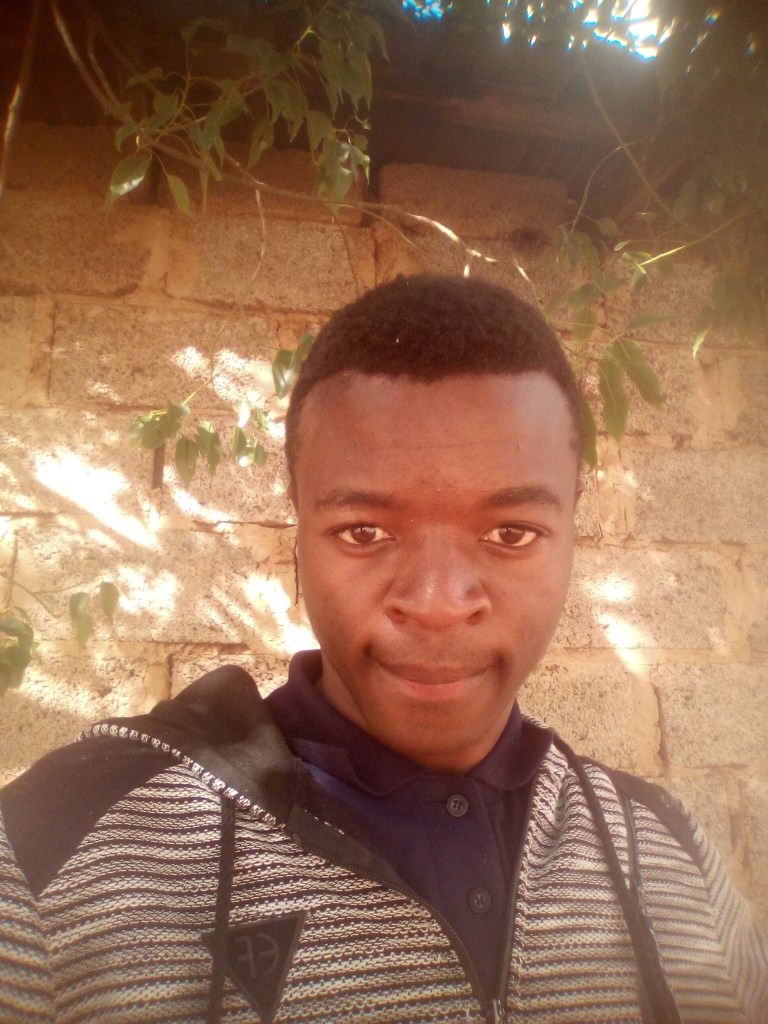
About: Dumisane Simelane Meighy

Dumisane Simelane Meighy Born 30 May 1998(age 24)[1]

MbabaneSwaziland[2][3][4][5]NationalitySwazi

OccupationPoliticianKnown as Activist, Political partyAfrican National CongressMovementSouth African Students Congress

dumisanesimelane8@gmail.com

Dumisane Simelane is an Swazi-born South African politician who was one of the prominent leaders of the (Restoring hope movement) protests in South Africa which led to a conversation on the introduction of equality for the poor, mainly black

Design a site like this with WordPress.com
Get started